Sulphur in Agriculture: The Complete Guide for Rabi Crops
Sulphur in Agriculture: The Complete Guide for Rabi Crops
Sulphur is recognized today as one of the most essential secondary nutrients in modern agriculture. Although required in smaller quantities than nitrogen or phosphorus, its influence on crop growth, yield quality, and resistance to stress is exceptionally significant. Sulphur plays a central role in photosynthesis, protein formation, oil synthesis, flavour development, nutrient efficiency, and even disease suppression.
In recent years, sulphur deficiency has increased rapidly due to intensive farming, reduced use of sulphur-containing fertilizers, and declining organic matter in soils. This makes timely sulphur fertilization a crucial part of crop management, especially during the rabi (winter) season, when oilseed crops like mustard, rapeseed, and many vegetables have a high demand for this nutrient.
Why Sulphur Is a Vital Secondary Nutrient
Sulphur directly supports the formation of chlorophyll, the green pigment responsible for energy capture in photosynthesis. Without sulphur, plants cannot convert sunlight into usable energy efficiently. Its presence is also essential for synthesizing amino acids such as methionine, cysteine, and cystine, which form the building blocks of plant proteins.
In crops grown for flavour, aroma, oil and spice content, sulphur becomes even more crucial. Plants like onion, garlic, turmeric, ginger, mustard, soybean, groundnut, and leafy vegetables rely heavily on sulphur to maintain their characteristic nutritional and commercial value.
Role of Sulphur in Enhancing Crop Quality
Sulphur significantly improves the quality parameters of many agricultural products. In oilseed crops, sulphur boosts oil percentage, enhances fatty acid composition, and promotes the formation of compounds like glucosinolates that contribute to the pungency and aroma of mustard oil.
In spice crops such as turmeric, ginger, and onion, sulphur intensifies flavour, spiciness, fragrance, and essential oil content. In vegetables and pulses, it improves sugar content, protein formation, and maintaining healthy green foliage, leading to better marketable quality and consumer appeal.
Sulphur and Nutrient Synergy: Increasing Fertilizer Use Efficiency
One of the most important scientific relationships in plant nutrition is the Nitrogen–Sulphur (N:S) ratio, ideally maintained around 15:1.
Without adequate sulphur, plants cannot properly utilize nitrogen, resulting in:
-
Poor vegetative growth
-
Reduced protein formation
-
Weak crop structure
-
Increased nitrogen losses
Sulphur also plays a powerful role in mobilizing phosphorus, potassium, zinc, boron, and iron, making these nutrients more available to crops. This synergy leads to higher fertilizer efficiency, better nutrient uptake, and improved plant metabolism.
Physiological Importance of Sulphur in Plants
Sulphur is involved in several fundamental physiological processes:
Photosynthesis and Energy Production
Chlorophyll formation requires sulphur, and even slight deficiency reduces the plant’s ability to produce energy.
Protein and Enzyme Formation
Sulphur is part of important coenzymes, vitamins (like thiamine and biotin), and antioxidants that regulate plant growth and metabolism.
Stress Resistance
Sulphur compounds help neutralize oxidative stress, allowing plants to tolerate drought, cold waves, and temperature fluctuations, which are common during rabi season.
Sulphur in Plant Protection: Natural Fungicidal & Miticidal Properties
Apart from being a nutrient, sulphur is widely used as a natural fungicide and insecticide.
It is particularly effective against:
-
Powdery mildew
-
Red mites
-
Certain fungal spores
A foliar spray of 80% Wettable Sulphur @ 2 g per litre of water provides excellent control on most vegetables, orchards, oilseeds, and grapevines.
Sulphur works by creating an inhospitable environment on the leaf surface, disrupting fungal growth without harming the plant.
Recognizing Sulphur Deficiency in Crops
Sulphur deficiency often resembles nitrogen deficiency but starts from younger leaves, not older ones. Typical symptoms include:
-
Pale yellowing near the leaf stalks
-
Light green foliage that does not improve even after nitrogen application
-
Thin, weak stems
-
Delayed flowering and maturity
-
Reduced aroma and dull finish in oilseed crops
-
Smaller bulbs in onion and garlic
Sandy soils with low organic matter are especially prone to this deficiency.
Application of Sulphur in Rabi Crops
Sulphur is immobile within the plant, so crops require a continuous supply from emergence to harvest.
For best results:
Basal Application at Sowing
Apply sulphur fertilizers during field preparation for uniform availability during root development.
Top Dressing After 20–40 Days
In case basal application is missed, apply sulphur early in the vegetative stage to support protein formation and branch development.
Foliar Spray During Early Flowering
A foliar dose ensures proper oil synthesis and boosts crop quality during the most sensitive reproductive phase.
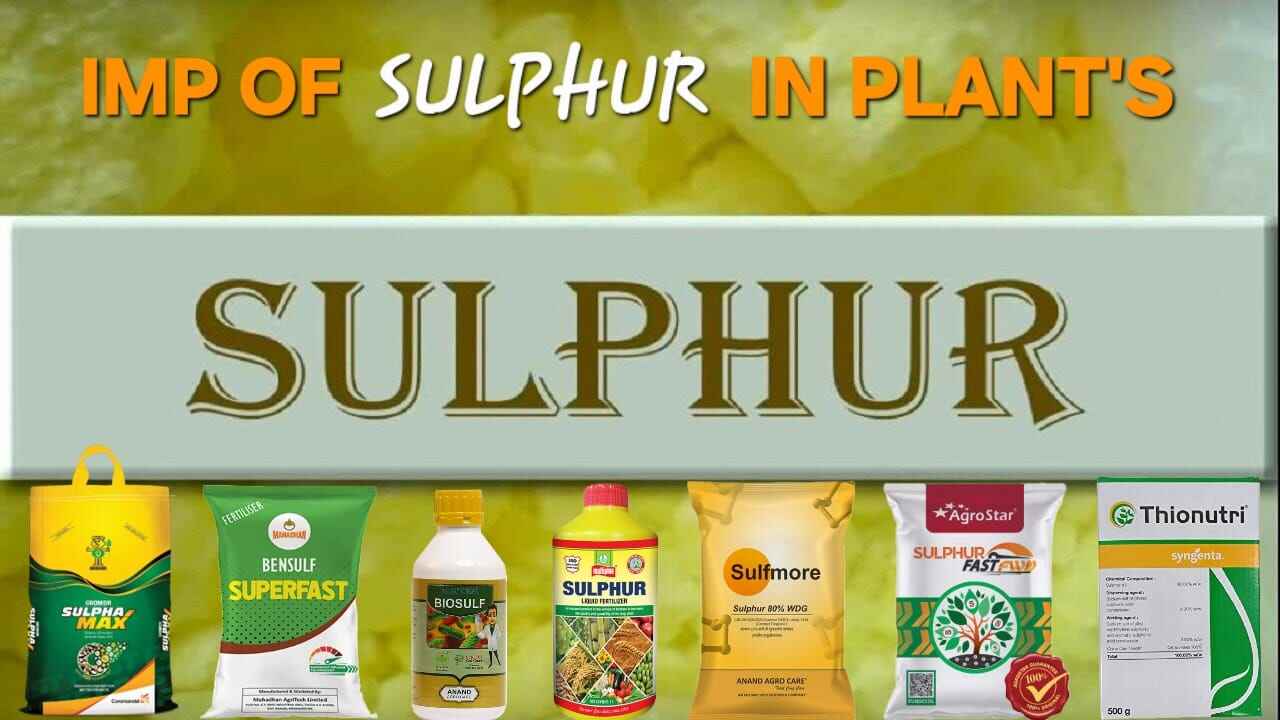
Sources of Agricultural Sulphur
Sulphur can be provided through various fertilizer forms:
Elemental Sulphur (90%):
-
Benesulf 90%
-
Kosavete 90%
-
Sulfamax Gromor 90%
-
Zuari Sulphur 90%
These slow-release forms enrich soil sulphur levels over time and are excellent for oilseeds, cereals, and vegetables.
Sulphate-Based Fertilizers:
-
Single Super Phosphate (SSP)
-
Sulfate of Potash (SOP)
-
Water-soluble 00:00:50
-
20:20:00:13 (NPK with sulphur)
These forms supply sulphur along with other essential nutrients, improving overall nutrient balance.
Through Drip Irrigation
In vertical or high-density crops, sulphur can be applied through fertigation for uniform distribution and quick absorption.
Precautions While Using Sulphur
Because sulphur generates heat in soil and plant tissues, avoid using elemental sulphur during peak summer.
It is best suited for winter crops, cloudy weather, and periods of high soil moisture, where its heat-producing property actually strengthens plants.
Why Sulphur Is Critical for Rabi Season Performance
Rabi crops like mustard, rapeseed, wheat, chickpea, vegetables, and garlic require sulphur for:
-
High oil and protein content
-
Strong root development during cold weather
-
Higher resistance to frost and winter stress
-
Efficient nitrogen utilization
-
Better flowering and pod formation
Several field studies across India have shown that sulphur application provides remarkably high economic returns, especially in sulphur-deficient regions.
Also read this
Hydroponics – Alternative Farming
https://krushigyan.com/hydroponics-alternative-farming/
Click the link below to join our Facebook group for the latest updates on modern agriculture