Nematodes in Ginger: Symptoms, Types & Control Guide
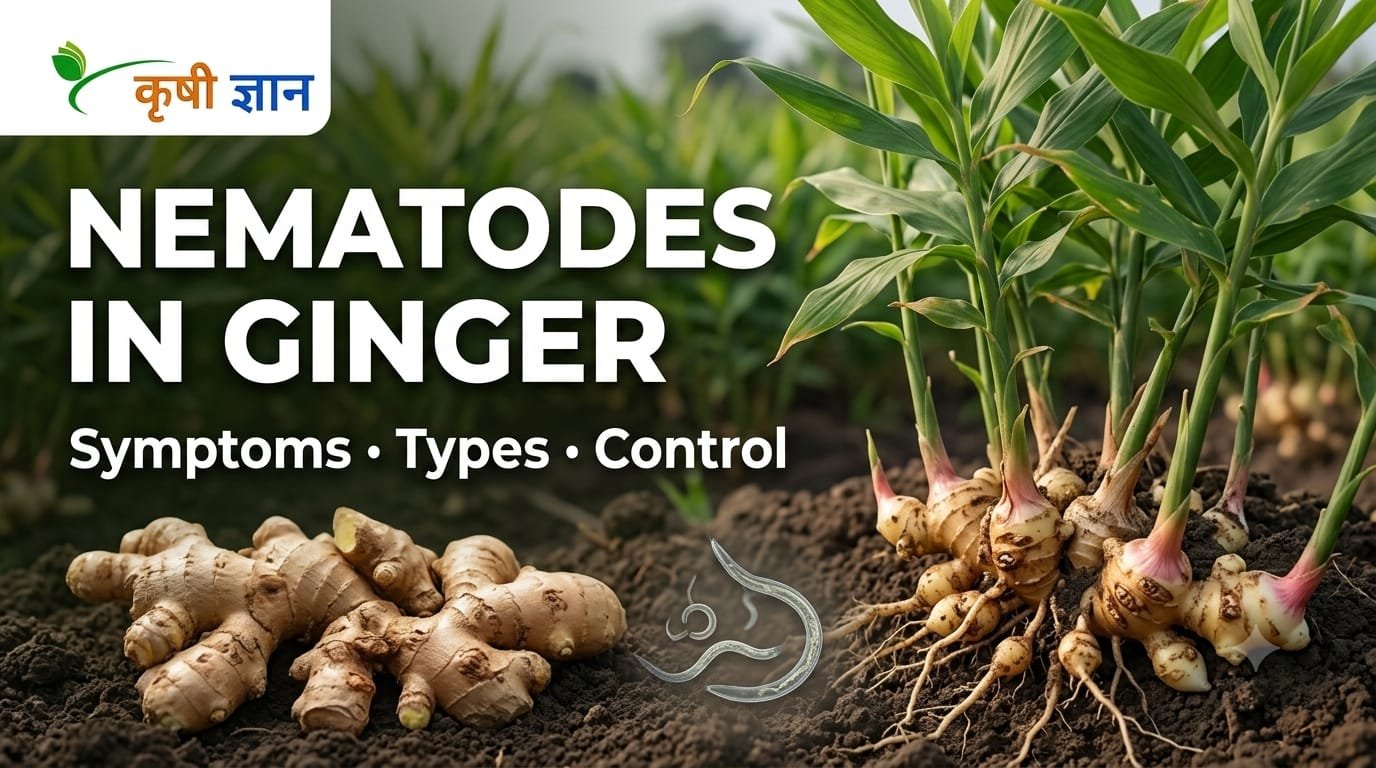
Nematodes in Ginger: Symptoms, Types & Control Guide
What Are Nematodes?
Nematodes are microscopic, thread-like roundworms present in soil and plant roots. Some are beneficial, but plant-parasitic nematodes attack roots and reduce water and nutrient absorption.
In ginger, nematode damage can remain hidden below the soil surface for a long time. By the time above-ground symptoms appear, the root and rhizome system may already be affected.
Major Nematodes Found in Ginger
The most important nematodes to consider in ginger are:
1. Root-Knot Nematode – Meloidogyne spp.
This is one of the most important nematode groups in ginger.
They enter roots and cause swelling and gall formation.
Common species include Meloidogyne incognita and Meloidogyne javanica.
Key symptom: Root galls + poor root development + stunted plants.
2. Lesion Nematode – Pratylenchus spp.
These nematodes enter roots and produce brown to dark lesions.
Damaged roots become weak and may become more vulnerable to secondary soil-borne pathogens.
Key symptom: Root lesions + reduced feeder roots.
3. Reniform Nematode – Rotylenchulus reniformis
This nematode feeds around the root system and can reduce root efficiency.
It may contribute to:
Stunting + yellowing + poor root development + reduced crop vigour.
4. Burrowing Nematode – Radopholus similis
This is another important root-parasitic nematode that can occur in ginger-growing systems.
It damages roots and can contribute to root deterioration and poor plant growth.
5. Spiral / Coil Nematode – Helicotylenchus spp.
These are commonly called spiral or coil nematodes because of their characteristic body posture.
They feed around roots and may contribute to poor feeder-root development and reduced plant vigour.
6. Ring Nematode
Ring nematodes belong mainly to the Criconematidae group.
They feed externally on roots and can damage fine feeder roots.
Their importance varies with soil, crop and geographical location.
7. Dagger Nematode – Xiphinema spp.
Dagger nematode is the correct agricultural term; “dragon nematode” is not the usual plant-pathology classification.
They are relatively large ectoparasitic nematodes that feed on roots using a long stylet.
Which Nematode Is Most Important in Ginger?
For practical ginger-field diagnosis, Root-knot nematode (Meloidogyne spp.) should be one of the first suspects when characteristic root galls are present.
However, the exact nematode species should be confirmed through soil and root analysis, especially in fields showing repeated problems.
Symptoms of Nematodes in Ginger
Above ground:
Stunted growth → yellowing → poor vigour → uneven crop growth → premature drying in severe cases.
Below ground:
Root galls, root lesions, reduced feeder roots and poor root development.
The final result can be:
Poor rhizome development → reduced yield.
Favourable Conditions
There is no fixed “nematode month.”
Nematode populations generally increase when:
Warm soil + adequate moisture + susceptible roots = favourable conditions.
Repeated ginger cultivation, infested planting rhizomes, poor sanitation and suitable soil conditions can help populations build up.
Biological Control of Nematodes
Biological control should preferably be used as a preventive and integrated root-zone management strategy, rather than waiting until severe damage occurs.
1. Verticillium chlamydosporium
The fungus now commonly classified as Pochonia chlamydosporia was historically referred to as Verticillium chlamydosporium.
It is particularly important against root-knot nematode eggs.
The fungus can colonize/parasitize nematode eggs and thereby reduce the development of the next generation.
2. Paecilomyces lilacinus
The currently accepted name is Purpureocillium lilacinum.
It is an important nematode-antagonistic fungus, particularly associated with suppression of root-knot nematode eggs and juveniles.
It is useful as part of an integrated biological management program.
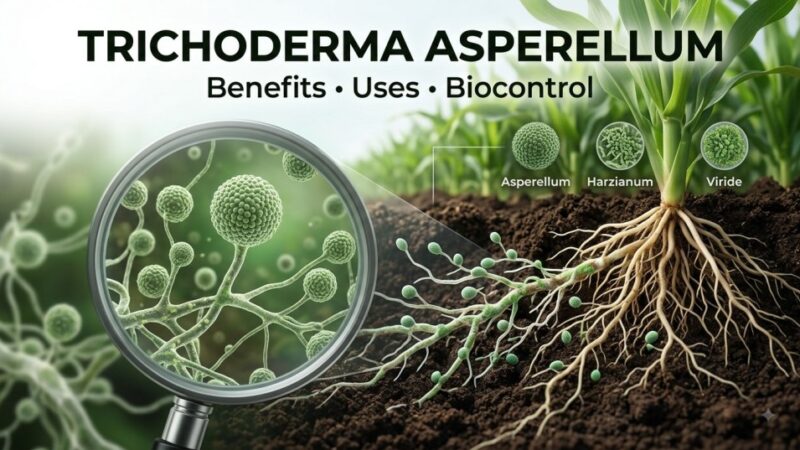
3. Trichoderma spp.
Trichoderma helps maintain a healthier rhizosphere and can contribute to suppression of soil-borne pathogens and nematode pressure.
It works best as part of an integrated soil-health program.
4. Pseudomonas fluorescens
Pseudomonas can support root health and contribute to biological suppression of plant-parasitic nematodes.
Physical & Preventive Management
Use healthy, nematode-free ginger rhizomes for planting.
Avoid taking planting material from fields showing root galls, severe stunting or repeated poor growth.
Summer deep ploughing can expose nematode-infested soil to high temperature and drying.
Where practical, soil solarization can be used, especially for nursery/bed preparation.
Crop rotation with suitable non-host crops can help reduce nematode population build-up.
Neem cake and well-decomposed organic matter can be incorporated as part of integrated nematode management.
Chemical Management
Chemical nematicides should be used only after diagnosis and according to the current crop-specific registered label.
Velum Prime
Active ingredient: Fluopyram
Fluopyram acts on succinate dehydrogenase/mitochondrial Complex II, interfering with energy production in nematodes.
Do not automatically use a dose registered for another crop in ginger.
Vaniva
Active ingredient: Cyclobutrifluram 38.4% w/w SC.
It is a modern nematicide chemistry used for nematode management.
Crop registration, dose, application method and label approval must always be checked before use in ginger.
Preventive vs Curative
Preventive
Healthy rhizome → clean field → summer soil management → crop rotation → organic amendments → biological agents → regular root inspection.
Curative
Identify nematode → inspect roots → soil/root testing → select registered nematicide if required → protect new root growth → continue biological and cultural management.
One Important Point
Nematode damage and rhizome/root diseases can occur together.
Nematode-damaged roots may become more vulnerable to secondary soil-borne pathogens.
Therefore:
Do not assume every ginger plant showing yellowing or drying has only a fungal disease.
Also read this
Sulphur in Agriculture: The Complete Guide for Rabi Crops
https://krushigyan.com/sulphur-in-agri-the-complete-guide-for-crops/
Click the link below to join our Facebook group for the latest updates on modern agriculture